Brief introduction of the main recycling ways of EPS foam
EPS has developed rapidly in China and is widely used in various shockproof packaging, construction, decoration, tableware and so on. However, EPS packaging materials are mostly disposable consumables, which are not easily degraded by themselves after being discarded, causing great pollution to the environment. Therefore, the development of EPS recycling, rejuvenation, and regeneration has become the most urgent issue in the current EPS packaging industry.
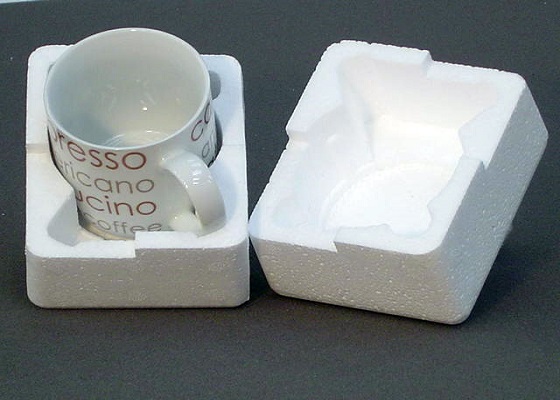
In recent years, China’s recycling of EPS waste has been valued by relevant departments. The government and other departments have strengthened macro guidance and orderly management. The corresponding regulations and policy support policies have been introduced one after another, and people’s awareness of resources and environmental protection has improved. Overall, China has made great achievements in the recycling of EPS. For example, waste EPS has been processed to produce XPS, which has become the main way for domestic EPS recycling.
The recycling of waste EPS foam products not only protects the environment, saves energy, but also has good economic benefits.
At present, the methods of EPS recycling are roughly as follows:
1.Simple landfill. This method costs labor, occupies land, and does not bring any benefits.
2.Used as fuel for incineration. Although this method can generate heat, it has a large investment.

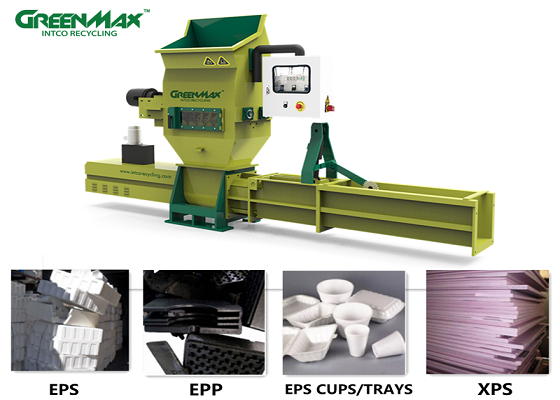
3.Adopting professional recycling machines, GREENMAX EPS compactor helps you compact and reduce the foam volume at a ratio of 50:1, the compacted foam blocks can be then granulated into PS pellets and used for other products production. At present, this recycling technology has been widely promoted worldwide and has become one of the main ways of EPS recycling.
4.Chemical recycling. The waste EPS is decomposed into reusable components such as monomers, compounds, fuels, etc., so that EPS recycling truly becomes a closed-loop process. The method has the following advantages: the chemical raw material produced by the decomposition can be comparable to the new material; in addition, it has the potential to deal with waste in a large amount, that is, it can realize the re-recycling and can achieve the pollution of the environment by the real treatment of EPS. The processes with industrial potential in current chemical recovery are cracking, vaporization, hydrogenation, and pyrolysis. Although chemical recovery is not novel from the reaction mechanism, there are still many engineering problems to be solved in order to be put into practical use.
5.Other methods, such as manufacturing rust-proof rust-proof paint, manufacturing multifunctional resin glue, manufacturing anti-seepage trapping agent, use as asphalt reinforcing agent, and the like.
Leave a Reply