How to recycle extruded polystyrene foam(XPS)?
Extruded polystyrene (XPS) is a rigid, closed-cell foam known for its excellent thermal insulation, moisture resistance, and compressive strength. It is widely used in building insulation, cold-chain logistics, automotive components, and protective packaging. As the demand for energy-efficient construction and durable packaging continues to grow, more XPS waste is being generated during manufacturing, installation, and demolition.
Although XPS is 100% recyclable, recycling it presents several challenges. The material is extremely lightweight but takes up a large amount of storage space, making transportation inefficient and expensive. Loose XPS foam also contaminates easily and many recycling facilities prefer receiving densified material rather than bulky foam. As a result, businesses often face rising disposal costs if they do not have an effective recycling solution.

How Is XPS Foam Recycled?
The most efficient way to recycle XPS foam is to reduce its volume before transportation. After collection and sorting, XPS waste is compressed or melted into high-density blocks. These compact blocks are much easier to store, transport, and sell to plastic recyclers. The recycled material is then processed into plastic pellets that can be used to manufacture new polystyrene products, helping create a more circular economy.
GREENMAX Machines for XPS Recycling
GREENMAX offers two professional solutions for XPS recycling. The GREENMAX foam densifier uses screw compression technology to reduce foam volume by up to 90:1, producing dense blocks that are easy to transport and recycle. For businesses handling even larger volumes of XPS waste, the GREENMAX melting machine uses heat to produce higher-density ingots, further reducing logistics costs while increasing the value of recyclable material.
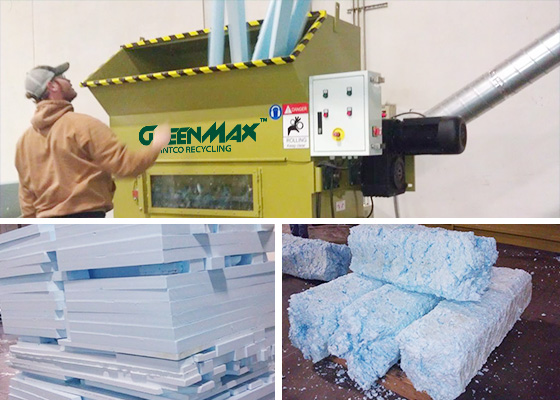
A North American manufacturer of insulation products generated large amounts of XPS production scrap every day. Loose foam occupied valuable warehouse space and required frequent waste collection, resulting in high disposal and transportation costs. After installing a GREENMAX foam densifier, the company was able to compress the foam into compact blocks on-site, reducing its volume by up to 90%. The densified material was then sold to downstream recyclers for pelletizing instead of being sent to landfill. This solution helped improve warehouse efficiency, lower waste management costs, and support the company’s sustainability goals.
Once recycled into plastic pellets, XPS can be used to manufacture a variety of products, including picture frames, decorative moldings, insulation materials, plastic profiles, and other polystyrene-based products. Recycling XPS not only reduces landfill waste but also decreases the demand for virgin plastic, making it an environmentally and economically beneficial solution.
For manufacturers, construction companies, and packaging businesses that generate large volumes of XPS waste, on-site recycling offers significant long-term benefits. Compressing foam at the source reduces storage space requirements, lowers transportation and disposal costs, improves recycling efficiency, and creates opportunities to recover value from waste materials. As sustainability regulations become increasingly important, investing in professional XPS recycling equipment is becoming a smart business decision.
FAQ
- Can extruded polystyrene (XPS) foam be recycled?
Yes. XPS foam is fully recyclable. After being compressed or melted into dense blocks, it can be processed into recycled plastic pellets and used to manufacture new plastic products. - Which GREENMAX machine is best for XPS recycling?
GREENMAX offers both foam densifiers and melting machines for XPS recycling. A foam densifier is suitable for most manufacturers and construction companies, while a melting machine is ideal for businesses that require higher density and maximum transportation efficiency. - What are the benefits of recycling XPS foam?
Recycling XPS foam helps reduce landfill waste, lower disposal and transportation costs, save warehouse space, improve operational efficiency, and generate additional value by converting waste foam into reusable raw materials.
Leave a Reply