PolyStyreneLoop Plant was officially opened as the first foam recycling plant in Holland
On June 16, 2021, PolyStyreneLoop Plant was officially opened as the first foam recycling plant in Holland. Here’s the factory-related information. The project is huge (70 different enterprises and associations in 18 countries sponsored PS loop together, found this solution, and the first factory was completed). At present, it is a focus on PS foam + Br (bromine), and the first plant is 3000ton / year. Later, it is planned to expand to 10 such projects in 7 countries. In the future, PolyStyreneLoop will continue to do electronic and automotive waste (ABS and hips).
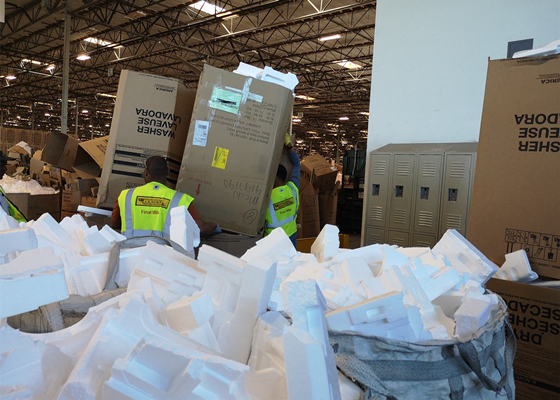
The original intention of the PS loop is to realize the double closed loop of PS and Br
In response to the Basel Convention, eumps has fulfilled its commitment to EU. Since the 1960s, all houses in Europe have been using HBCD flame retardant insulation board, but with the prohibition of HBCD, it is illegal to release HBCD into the atmosphere. So there must be a solution to solve the problem that foam insulation board is recycled, so HBCD is collected and disposed of reasonably. Foam recycling has been done for many years, 70% of the packaging materials have been recycled, and 11% of other types of EPS have also been recycled, but there is no plan for the recycling of building materials.
The director of the PS loop describes the uniqueness of this factory
1. It is the first factory in the world to separate HBCD and PS foam
2. Integration of raw material processing and product processing
3. Unique technology
4. Measurable methods
5. Complete the closed-loop of PS and bromine treatment
6. New products (particles) can be used in the same way (making insulation board) instead of previous materials
7. All electricity is generated by wind and solar power
8. Carbon emissions are close to physical recovery
9. The recovery guarantee of eumeps for EU has been completed
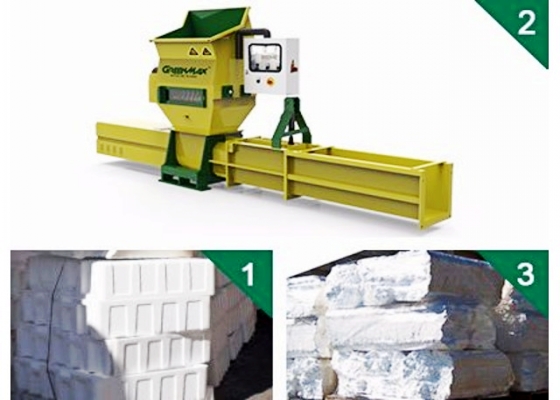
Impact on the foam recycling industry
This project has led to an increase in demand for foam recycling machines, because the project requires compressed materials, especially in the construction industry, and dirty materials that were not previously planned.
Leave a Reply