How to Dispose of Polystyrene Waste in California?
Expanded polystyrene, commonly known as Styrofoam, is one of the most widely used protective packaging materials for home appliances. Refrigerators, televisions, washing machines, air conditioners, and other large household products are typically packaged with molded EPS inserts to prevent damage during storage and transportation. While EPS provides excellent cushioning, insulation, and lightweight protection, it also creates a growing amount of bulky polystyrene waste after the products are unpacked.
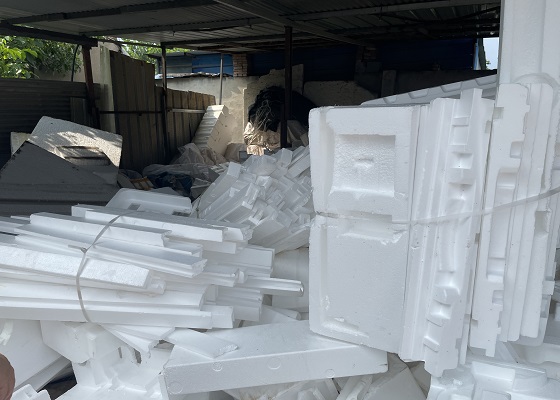
For appliance retailers, distribution centers, warehouses, and repair facilities across California, waste EPS packaging is generated every day. Although the material weighs very little, it occupies a large amount of storage space. A few truckloads of home appliances can quickly produce enough loose EPS packaging to fill an entire waste container. As business volume increases, companies often face rising storage, transportation, and disposal costs simply because of the large volume of discarded foam.
The biggest challenge in polystyrene recycling is not the material itself, but its low density. Uncompressed EPS contains approximately 98% air, making it expensive to transport to recycling facilities. Without volume reduction, businesses may need frequent waste pickups, additional warehouse space, and higher labor costs for handling loose foam packaging. These factors make traditional disposal methods both inefficient and costly.
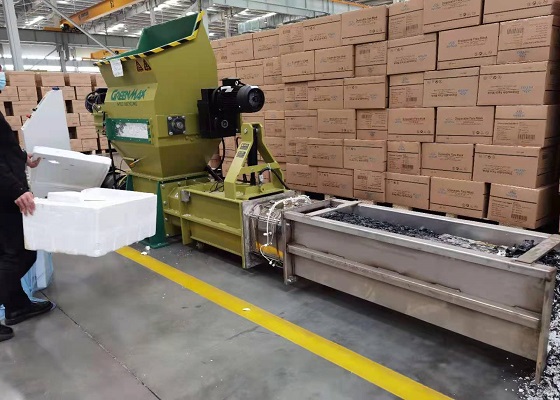
An effective solution is to use foam compactor directly at the facility where the waste is generated. GREENMAX foam compactor uses cold compression technology to reduce the volume of EPS by up to 50:1. After processing, loose appliance packaging is converted into high-density EPS blocks that are easy to stack, store, transport, and recycle.
Many appliance manufacturers, logistics companies, and recycling businesses have already adopted on-site foam recycling equipment to improve operational efficiency. Instead of paying to dispose of bulky foam waste, they can significantly reduce transportation frequency, free up valuable warehouse space, and prepare compressed EPS blocks for downstream recycling. The recycled material can then be processed into recycled polystyrene pellets and used to manufacture new plastic products, supporting a circular economy.
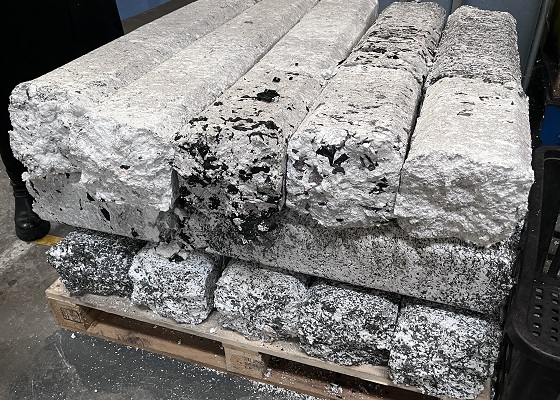
As California continues to encourage sustainable resource management and waste reduction, recycling appliance packaging has become a practical investment for businesses handling large volumes of EPS. By using foam compactor, companies can lower disposal costs, improve warehouse management, increase recycling efficiency, and transform waste polystyrene into a valuable recyclable resource.
FAQ
- What types of polystyrene waste can be recycled?
Most clean EPS packaging waste, including appliance packaging, electronics packaging, furniture packaging, fish boxes, and protective foam inserts, can be recycled. - What is the machine for recycling polystyrene waste?
GREENMAX EPS compactor is one of the most effective solutions. These machines compress loose foam into dense blocks that are easier to store, transport, and recycle. - What happens to recycled polystyrene after compression?
Compressed EPS blocks are transported to recycling facilities, where they are processed into recycled plastic pellets and manufactured into new plastic products such as picture frames, construction materials, and other plastic components.
Leave a Reply